
Investments in Indian capital market through participatory notes (P-notes) dropped to Rs 94,826 crore till November-end after hitting 43-month high in the preceding month. P-notes are issued by registered foreign portfolio investors (FPIs) to overseas investors who wish to be a part of the Indian stock market without registering themselves directly. They, however, need to go through a due diligence process.

Equity benchmarks Sensex and Nifty ended on a mixed note on Wednesday as the euphoria about the Budget fizzled out, with investors going for profit-taking ahead of the Fed interest rate decision. The 30-share BSE benchmark Sensex climbed 158.18 points or 0.27 per cent to settle at 59,708.08 after it trimmed most of the intra-day gains. During the day, it had zoomed 1,223.54 points or 2 per cent to 60,773.44.

Foreign portfolio investors, on the other hand, have been net sellers in the markethaving pulled out Rs 8,600 crore

Dr Reddy's was the top gainer in the Sensex pack, rising over 3 per cent, followed by PowerGrid, TCS, HCL Tech, Infosys and Reliance Industries. On the other hand, L&T, IndusInd Bank, Bajaj Finserv and Bharti Airtel were among the laggards.

In the Sensex pack, Bharti Airtel was the top performer, surging 4.61%. Other gainers included ICICI Bank, IndusInd Bank, L&T, Sun Pharma, RIL, HDFC duo, Tata Motors and M&M -- climbing up to 3.69%.

The gap between the highs and the lows in April for the benchmark S&P BSE Sensex was just 4.1 per cent - the narrowest since July 2021 and nearly half its three-year average. The absence of major positive triggers, sectoral rotation, and cautiousness due to earnings and economic uncertainty have kept a tight leash on the markets, observe experts. Remarkably enough, during the 17 trading sessions in April, the Sensex didn't even log an advance or a decline of more than 1 per cent.

Of the 70 international feeder funds, more than half have made losses in 2014.

India is still the best story in major emerging markets from a 5-year perspective.
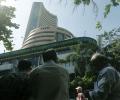
BSE benchmark Sensex plummeted over 388 points to close at 58,576.37 on Tuesday, tracking weakness in index majors Wipro, RIL and Bharti Airtel amid a weak trend in global markets. Investors also remained cautious ahead of crucial macroeconomic data announcements -- industrial production for February and inflation rate for March -- post trading hours. The Sensex declined 388.20 points or 0.66 per cent to settle at 58,576.37. During the day, the benchmark tanked 666 points or 1.12 per cent to 58,298.57.

'We plan to add over 100,000 square kilometres every year, to reach an ambitious target of 500,000 square kilometres by 2025.'

All nine Adani stocks saw a rise in their share price in H1FY23, ranging from 6.1% in case of Adani Ports to 102% in case of Adani Power.

Investors' wealth on Tuesday jumped by over Rs 2.51 lakh crore, in tandem with a sharp recovery in equities after four days of heavy declines. The 30-share BSE Sensex opened on a weak note and tumbled 581.93 points or 1.10 per cent to 52,260.82 during the day amid firming oil prices and relentless selling by foreign institutional investors. Amid bouts of volatility, the benchmark touched a high of 53,484.26 and a low of 52,260.82 during the trade. It finally settled at 53,424.09, higher by 581.34 points or 1.10 per cent.

Private equity investments in Indian companies grew 38 per cent to $62.2 billion last year, with inflows into Reliance Industries' telecom and retail ventures contributing nearly 40 per cent of the total value of the deals, a report said on Wednesday. Barring investments into Jio Platforms and Reliance Retail, the total deal value was down by 20 per cent over 2019 as the volume of large deals of more than $100 million dipped by a fourth, as per the report by Bain & Company and India Venture Capital Association. Overall investment activity remained muted from March to May last year due to COVID-led uncertainties and investor confidence recovered strongly in the second half to pre-COVID levels with late-stage and buyout deals witnessing increased traction, it said.

PowerGrid was the top loser in the Sensex pack, shedding around 3 per cent, followed by Asian Paints, Axis Bank, Kotak Bank, Bajaj Auto, SBI and M&M.
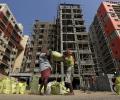
Housing sales across seven major cities in the country fell 35 per cent year-on-year to 50,983 units during the July-September period even as the demand recovered post lockdown, according to data analytics firm PropEquity. Sales stood at 78,472 units in the year-ago period in seven cities -- Delhi-NCR, Mumbai Metropolitan Region (MMR), Chennai, Kolkata, Bengaluru, Hyderabad and Pune.

CreditSights has dialed back on its language on debt levels at richest Indian Gautam Adani's group but has maintained that the group's leverage is elevated. In a new note published after discussions with the group's management, CreditSights, a Fitch group firm, said it "has discovered calculation errors" in its recent debt report on two Adani Group companies but these did not change its investment recommendations. On August 23, CreditSights stated that the Adani group was "deeply over-leveraged" and may "in the worst-case scenario" spiral into a debt trap and possibly a default.

The growth premium India enjoyed has largely been lost.

The rupee on Tuesday recovered from its all-time intra day low of 77.79 to close higher by 7 paise on a stellar rally in domestic stock markets. After opening lower at 77.67, the local unit plunged further to its all-time intra-day low of 77.79 due to a spike in crude oil prices and disappointing macroeconomic data. However, a strong rally in domestic equities helped the rupee rebound and close at 77.48 (provisional), showing net gains of 7 paise over the last close of 77.55. The forex market was closed on Monday on account of Buddha Purnima.

The global realty consultant attributed the rise in PE investments to increased attraction of institutional investors towards leased income generating office buildings.

Besides financials, shares of telecom, IT, auto and pharma were in demand.

After a two-year lull, the deal pipeline in India's hospitality sector, which has witnessed a strong revival since the second wave of the pandemic receded, is running full. Family offices, high net-worth individuals (HNIs) and institutional investors are looking at the sector with renewed interest, according to investment and transaction advisory firms working on multiple deals. Most of them declined to divulge details of the deals for reasons of confidentiality. The cumulative debt of the tourism, hotels and restaurant sector rose 8.2 per cent year-on-year (YoY) to Rs 64,408 crore as of March 25, 2022 against Rs 59,519 crore on March 26, 2021, according to the Reserve Bank of India.

Deepening the funding crisis that startups have been witnessing for some time, the October inflows plunged 75 per cent on-year to $3.3 billion across 75 deals, including six large deals worth $2.2 billion, according to an industry report. Exits touched half of the inflows at $1.6 billion across 15 deals in the reporting months, a significant improvement over the previous month which saw just $653 million worth of exits across 24 deals, but 69 per cent lower on-year basis, according to the numbers collated by EY for the Indian Private Equity & Venture Capital Association, the umbrella body the PEs and VCs. However, the report said, on a month-on-month basis, the inflows continued to grow, clipping at 60 per cent over the September numbers.

Is the worst over for Indian banks? The past two years saw them ride on treasury trades as deposits soared and credit growth dipped sharply. Gross and net non-performing assets (NPAs) moved south, and the provision coverage ratio (PCR), capital buffers, and profitability indicators are back at pre-pandemic levels. So, what's the plot ahead?
At a time when banks are engaged in a fierce battle to gain market share in the credit card segment, Citibank India has been losing its share, both in terms of outstanding cards and spends in the last few years. Still, average spends on Citi cards are higher than any other Indian bank. Last year, the global banking behemoth announced exit from its consumer banking franchises in 13 markets across Europe, Middle East and Asia, including India, citing lack of scale.

Richest Indian Gautam Adani's conglomerate has cited an improved net debt to operating profit ratio and more than halving of loans from public sector banks to allay concerns about it being overleveraged. In a 15-page note in response to CreditSights report calling the group overleveraged, it said companies in the group have consistently de-levered, with the net debt to Ebitda ratio declining to 3.2 times from 7.6 times in the last nine years. "The businesses operate on a simple yet robust and repeatable business model focused on development and origination, operations and management and capital management plan," the note, reviewed by PTI, said.

Benchmark BSE Sensex gave up its early gains to settle lower by 115 points on the last day of 2021-22 fiscal on Thursday, dragged down by profit-taking in Reliance Industries, Infosys and HDFC Bank after a three-day rally. The 30-share barometer declined by 115.48 points or 0.20 per cent to settle at 58,568.51 in choppy trade due to the expiry of monthly derivatives contracts. During the day, it touched a high of 58,890.92 and a low of 58,485.79.

From the 30-share pack, Sun Pharma, TCS, Tech Mahindra, NTPC, Wipro, UltraTech Cement, Dr Reddy's Laboratories and Infosys were the major gainers, jumping up to 3.99 per cent. In contrast, Tata Steel, Nestle, Titan Company, PowerGrid, Reliance Industries Limited and State Bank of India were among the laggards.

Gold, the safest haven amid the ongoing uncertainty, also emerged as one of the most lucrative investment options in financial year 2022-23 with an impressive return of 16.1 per cent in rupee terms, and 2.3 per cent returns in dollars. And, had it not been for the very high inflow of smuggled gold and the huge discount prevailing in the market due to high prices, the returns in gold would have been much higher, analysts said. The precious metal has consistently been delivering positive returns in India since 2016.

The retail industry witnessed robust top-line growth for the greater part of the previous financial year, but demand has started to show signs of fatigue seen in the January-March quarter (fourth quarter, or Q4) of 2022-23 (FY23), especially in the apparel and innerwear segments. Jewellery, however, has managed to hold on to demand in the quarter. "In the discretionary space, demand moderation in urban markets is expected to impact the quick-service restaurant and apparel categories the most, while paint, luggage, and jewellery should see resilient growth," Systematic Institutional Equities observed in its preview of the sector.

The broader NSE Nifty reclaimed the key 10,000-mark and touched a high of 10,143.50 before finally settling at 10,130.65

The external environment has worsened further. While the Finnish economy entered into a recession, Swedish economic growth also dipped. The Finnish gross domestic product (GDP) dropped 0.6 per cent in October-December, 2022. It was the second quarter of negative growth, which is a technical definition of recession.

The outbreak of the Omicron variant of the coronavirus and unprecedented lockdowns in China have roiled its equity market and also that of Hong Kong. After the crisis-hit Sri Lanka, China and Hong Kong are the worst-performing stock markets in Asia on a year-to-date basis.

'The inflection point that really happened in the sector was during the pandemic when buyers' perception changed towards consumption and that gave a trigger to pent-up demand with the increased affordability.'
